Continuous Glucose Monitors for Non-Diabetics: What Can You Actually Learn?
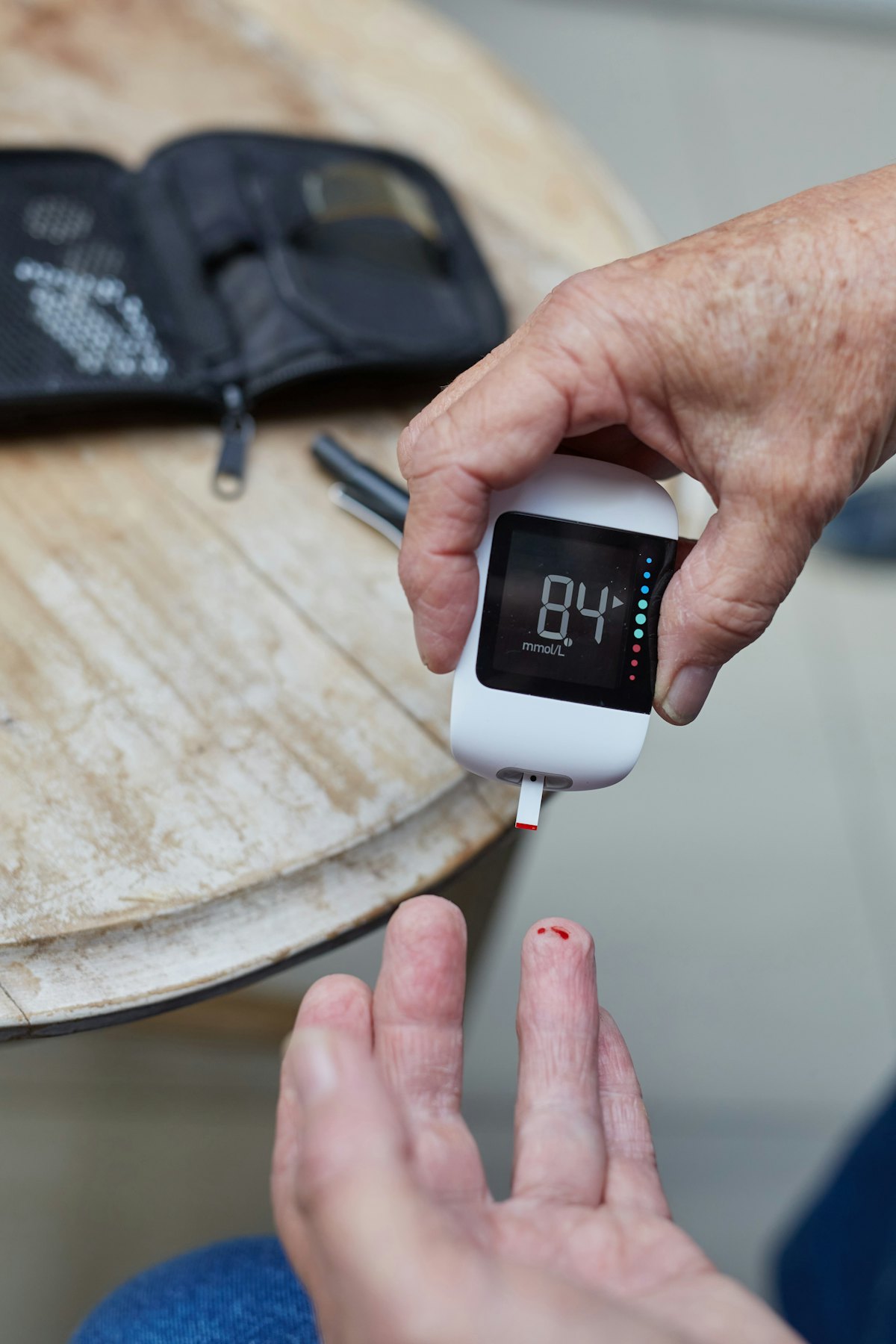
I love a good wearable. As a biohacker, I'm fascinated by anything that turns the invisible workings of the body into data I can see. Few devices have captured the wellness world's imagination like the continuous glucose monitor (CGM). Once the preserve of people with diabetes, these arm patches are now marketed to healthy people who want to "optimise" their metabolism. So, as a dietitian: if you don't have diabetes, what can a CGM actually teach you?
What a CGM actually is
A CGM is a small sensor, usually worn on the back of the upper arm, that samples glucose in the fluid between your cells every few minutes — a near-continuous trace of how your levels rise and fall. It's an elegant window into a process most of us never observe. But it is a self-monitoring tool, not a diagnostic test, and the interstitial reading lags real-time blood glucose by several minutes.
The research is genuinely interesting
The most useful thing CGMs have given us is a clearer picture of what "normal" looks like. In a multicentre study of 153 healthy, non-diabetic people, average glucose sat around 5.5 mmol/L, and participants spent roughly 96% of the time in the 3.9–7.8 mmol/L range — yet even these healthy individuals spent a median of about 2% of the day above 7.8 mmol/L.[1] Transient "spikes" are normal physiology, not a sign something is broken. Stanford researchers also used CGMs to classify people into "glucotypes", finding that many people considered normal by standard blood tests still showed glucose swings into impaired ranges at times.[2]
We don't all respond to food the same way
The best-supported and most exciting finding: in a landmark study of 800 people measuring responses to nearly 47,000 meals, researchers found strikingly different glucose responses to the very same foods.[3] This was confirmed in the large PREDICT study of over 1,000 adults, which showed postprandial responses are highly individual and shaped by context — meal timing, food order, activity and sleep.[4] Seeing that your usual breakfast sends you on a rollercoaster, while a tweaked version keeps you steady, can be a powerful, concrete nudge toward better habits.
Now for the honest part: the hype
Interesting is not the same as clinically meaningful for a healthy person. There is, as yet, very little evidence that wearing a CGM improves any hard health outcome in metabolically healthy people. The strongest randomised trial of a personalised, glucose-informed nutrition programme found only modest improvements in markers like triglycerides — and it bundled CGM data with broader dietary and lifestyle coaching, so we can't credit the device itself.[5] There are real downsides too: it's easy to start treating normal physiology as a problem, cut out nourishing whole foods like fruit, oats or legumes, and drift toward unnecessarily restrictive eating — a significant risk for anyone with a history of disordered eating.
So, is it worth it?
My balanced verdict: a CGM is a fascinating educational and behavioural tool, not a health upgrade in itself. If you're a curious, metabolically healthy person who can treat the data with a light touch — using it for a few weeks to learn how your body responds to your meals, then applying those lessons — it can sharpen your habits. But if numbers make you anxious, or you're prone to over-restriction, I'd gently steer you away. If you have real concerns about your blood sugar, see your GP for proper testing rather than relying on a wellness wearable.
References
- Shah VN, et al. Continuous Glucose Monitoring Profiles in Healthy Nondiabetic Participants: A Multicenter Prospective Study. J Clin Endocrinol Metab. 2019. PubMed
- Hall H, et al. Glucotypes reveal new patterns of glucose dysregulation. PLoS Biol. 2018. PubMed
- Zeevi D, et al. Personalized Nutrition by Prediction of Glycemic Responses. Cell. 2015. PubMed
- Berry SE, et al. Human postprandial responses to food and potential for precision nutrition. Nat Med. 2020. PubMed
- Bermingham KM, et al. Effects of a personalized nutrition program on cardiometabolic health: a randomized controlled trial. Nat Med. 2024. PubMed